
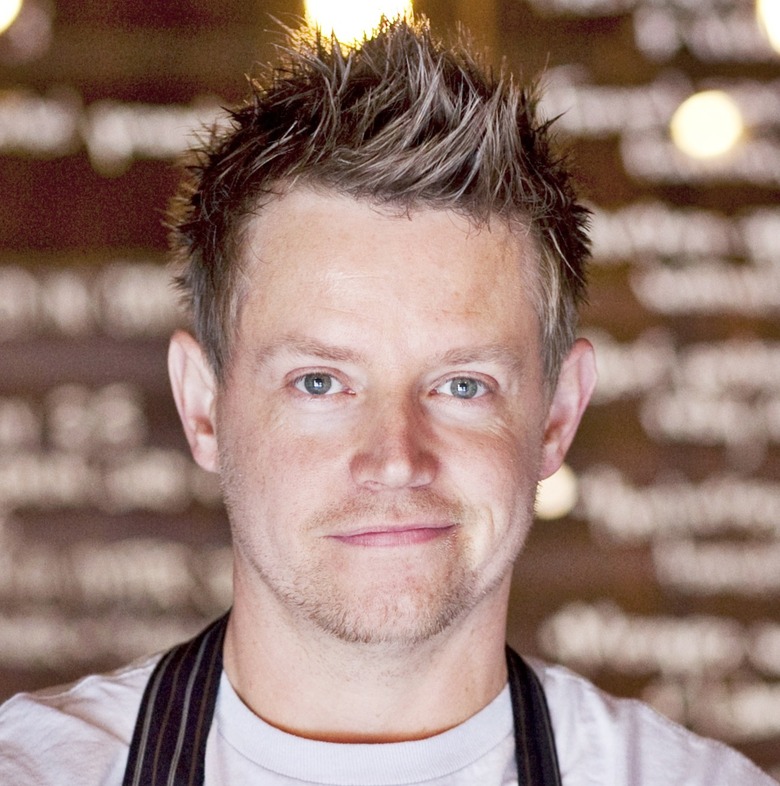






Richard Blais: Culinary Innovator, Television Personality and Gastronomic Entrepreneur
Richard Blais has established himself as one of America’s most distinctive culinary voices, bridging the worlds of fine dining innovation, accessible restaurant concepts, and mainstream media presence. Rising from humble beginnings to national recognition, he represents the modern evolution of chef-as-brand, seamlessly integrating technical expertise with entertainment value while maintaining legitimate culinary credibility across multiple platforms.
Early Life and Culinary Foundation
Born in Uniondale, Long Island in 1972, Blais was raised in a middle-class household where cooking initially represented practical necessity rather than artistic pursuit. Unlike many prominent chefs who cite early epicurean influences, Blais has candidly shared that his introduction to food service came through necessity rather than passion—beginning with a teenage job at McDonald’s where he worked as a “fish fryer” and hamburger cook. This unglamorous entry point would later inform his unpretentious approach to culinary innovation and accessibility despite his eventual haute cuisine credentials.
His transition toward professional culinary ambition emerged during undergraduate studies at the State University of New York, where growing fascination with cooking techniques and restaurant culture eventually led him to the prestigious Culinary Institute of America. This formal training provided technical foundation while introducing him to classical methodologies that he would later both honor and deliberately subvert throughout his career evolution.
“My path wasn’t the romantic chef story of learning at my grandmother’s apron,” Blais explained in an interview with Food & Wine. “I discovered cooking through actual work—sweating in hot kitchens because I needed income. That perspective keeps me grounded even when I’m working with liquid nitrogen or complex techniques. At its core, cooking is about feeding people well, regardless of how technically elaborate the process becomes.”
This pragmatic foundation would later distinguish Blais from peers whose culinary philosophies often reflected more privileged culinary backgrounds, creating his characteristic balance between technical sophistication and practical accessibility that resonates with both professional colleagues and mainstream audiences.
Professional Development and Technical Evolution
Following his formal education, Blais undertook a series of strategic apprenticeships and positions specifically selected to develop specialized expertise beyond standard culinary school curriculum. His professional evolution included formative experiences at renowned establishments including The French Laundry under Thomas Keller, Daniel under Daniel Boulud, and brief but influential time with Ferran Adrià at El Bulli in Spain—experiences that exposed him to the vanguard of culinary innovation during the pivotal late 1990s and early 2000s.
These apprenticeships under contrasting masters provided unusual technical range—from Keller’s obsessive precision and ingredient reverence to Adrià’s boundary-dissolving conceptual approach. Rather than simply adopting any single mentor’s philosophy, Blais synthesized these influences into a distinctive personal approach that combined methodical technique with playful experimentation—a balance that would later define his competitive cooking style and restaurant concepts.
“What makes Richard’s approach interesting is how he integrates seemingly contradictory influences,” noted a former colleague from his early career. “He can execute classical French technique with absolute precision while simultaneously questioning fundamental assumptions about how ingredients should be prepared or presented. That willingness to both master and challenge tradition creates his distinctive culinary voice.”
This professional period also coincided with the emerging molecular gastronomy movement, where scientific techniques entered mainstream culinary consciousness. While many chefs approached these innovations as mere spectacle, Blais demonstrated unusual interest in the underlying principles, developing genuine understanding of how techniques like spherification, nitrogen freezing, and sous vide fundamentally affected flavor development and textural transformation rather than simply creating visual novelty.
Early Entrepreneurship and Business Challenges
Prior to his television breakthrough, Blais established himself as a culinary entrepreneur through several Atlanta-based ventures including BLAIS Restaurant, Element, and Concentration Kitchen between 2004-2008. These early businesses demonstrated his creative ambition but also provided valuable lessons in the business complexities that often challenge chef-driven concepts regardless of culinary merit.
Unlike many chef-entrepreneurs who obscure early setbacks, Blais has spoken candidly about initial business struggles and their educational value. “My early restaurants taught me that brilliant food concept alone isn’t enough,” he reflected in his memoir. “I had to learn about sustainable business models, investor relations, staff development, and consistent execution—sometimes through painful mistakes that ultimately proved invaluable.”
These experiences created the pragmatic business perspective that would later inform his more successful ventures, distinguishing him from peers whose creative brilliance often failed to translate into operational sustainability. This hard-earned wisdom regarding the intersection of culinary creativity and business viability would eventually become central to his advisory work with emerging chefs and restaurateurs.
“Richard developed unusual self-awareness about the gap between chef ambition and customer experience,” observed a restaurant investor who worked with his early concepts. “He learned to balance his innovative impulses with diner expectations rather than simply imposing his vision regardless of market feedback—that evolution from pure creative to thoughtful entrepreneur dramatically changed his trajectory.”
Television Breakthrough and Competitive Distinction
Blais’s introduction to national recognition came through his participation in Bravo’s “Top Chef” franchise, first competing in the Chicago-based fourth season in 2008 where he established himself as a technical innovator before ultimately placing second. His distinctive approach—combining scientific technique with playful creativity and genuine emotional investment—created compelling television that transcended typical cooking competition narratives.
What distinguished Blais from many culinary competitors was his unusual combination of technical precision, creative spontaneity, and articulate explanation—qualities that made his process accessible to viewers regardless of their culinary expertise. His ability to communicate complex techniques through relatable language and evident passion established him as a natural media personality beyond his cooking skills alone.
His redemptive victory on “Top Chef: All-Stars” in 2011 cemented his position within food television culture while demonstrating personal growth beyond technical skills. Throughout the season, Blais explicitly addressed psychological barriers and competitive insecurities that had previously limited his performance despite his technical advantages—a vulnerability rarely displayed in competition formats typically focused on projected confidence.
“What made Richard particularly compelling as a contestant was his willingness to acknowledge his struggles with perfectionism and self-doubt,” noted a television producer associated with the franchise. “Viewers connected with his very human combination of extraordinary skill and relatable anxiety—he showed that even at the highest levels of achievement, these psychological challenges remain relevant.”
This authentic display created narrative depth beyond cooking technique alone, establishing Blais as someone capable of addressing the emotional and psychological dimensions of professional kitchen culture rarely explored in mainstream culinary media. This capacity for nuanced self-reflection would later distinguish his approach as a judge, mentor, and media personality.
Restaurant Development and Concept Diversity
Following his television breakthrough, Blais strategically leveraged his increased visibility to develop restaurant concepts demonstrating greater business sophistication than his early ventures. Rather than creating single vanity projects, he developed a portfolio of establishments at varying price points and accessibility levels—a diversification strategy demonstrating evolved business understanding beyond pure creative expression.
His fine dining flagship, Juniper & Ivy in San Diego (opened 2014), established his serious culinary credentials with sophisticated technique and innovative concepts while attracting critical acclaim. Simultaneously, he developed The Crack Shack, a casual fried chicken concept that demonstrated his ability to apply refined technique to accessible formats without pretension—a duality perfectly expressing his culinary philosophy.
“What makes Richard’s restaurant portfolio interesting is how it authentically reflects his personal culinary journey from fast food to fine dining,” observed a hospitality consultant familiar with his operations. “He’s equally invested in perfecting a fried chicken sandwich and creating an elaborate tasting menu—that range feels genuine rather than calculated because it mirrors his actual experience rather than simply targeting different price points.”
This multi-tier approach has provided business sustainability unusual among chef-entrepreneurs, with casual concepts generating consistent revenue while flagship establishments maintain critical credibility and creative laboratory functions. The strategy demonstrates Blais’s understanding that culinary business requires both artistic integrity and financial viability rather than prioritizing either dimension exclusively.
Media Evolution and Brand Development
Beyond competition formats, Blais has demonstrated unusual versatility across media contexts, developing distinct but complementary presence across television judging (Food Network’s “Guy’s Grocery Games,” “Cutthroat Kitchen”), hosting (YouTube’s “Burger Lab,” “Cook Your Ass Off”), and recurring appearances on morning programs and entertainment shows. This diversification reflects strategic understanding of media ecosystem development rather than simply accepting available opportunities.
What distinguishes Blais’s media approach is his consistent culinary perspective across varying formats—maintaining authentic voice regardless of context rather than adopting dramatically different personas for different audiences. This consistency creates cumulative brand reinforcement across platforms, with each appearance building coherent identity rather than creating contradictory public impressions.
“Richard has this unusual ability to be simultaneously educational and entertaining regardless of format,” noted a culinary media executive who has worked with him across platforms. “He can explain complex molecular gastronomy on a morning show in ways that actually make sense to casual viewers without dumbing down the science or losing his distinctive perspective. That translation skill is extraordinarily rare.”
His cookbook publications similarly bridge accessibility and innovation—”Try This at Home” (2013) and “So Good” (2017) deliberately demystify sophisticated techniques for home cooks while maintaining genuine culinary perspective rather than simply offering simplified recipes. This approach reflects his broader philosophy that culinary innovation should expand cooking participation rather than creating exclusionary barriers.
Physical Transformation and Wellness Integration
Parallel to his culinary evolution, Blais underwent a significant physical transformation—losing over 60 pounds and developing a dedicated running practice culminating in marathon completion. This personal health journey has increasingly integrated into his professional identity, informing menu development philosophies and expanding his credibility in wellness conversations beyond pure indulgence cooking.
Unlike many chefs who separate their personal health practices from their professional cooking, Blais has deliberately incorporated nutritional awareness and balance into his culinary perspective, creating unusual dialogue between traditionally separate conversations about delicious food and healthful eating. This integration reflects his characteristic boundary-crossing between typically isolated domains.
“What’s particularly interesting about Richard’s wellness evolution is that he never compromises on flavor or satisfaction,” observed a nutrition writer who has collaborated with him. “He applies the same technical understanding and creativity to healthful cooking as he does to indulgent dishes—finding ways to maximize satisfaction and pleasure while being mindful of nutritional considerations rather than treating them as separate cooking categories.”
This balanced approach has positioned Blais advantageously within evolving food media that increasingly acknowledges connections between culinary pleasure and wellness concerns rather than treating them as oppositional forces. His credibility in both domains allows authentic contribution to conversations that often suffer from polarized perspectives emphasizing either pure indulgence or restrictive healthfulness.
Family Integration and Value Transmission
Central to Blais’s public identity is his role as husband to Jazmin and father to daughters Riley and Embry—relationships he positions not as separate from his professional life but as fundamental influences on his culinary perspective and career decisions. Unlike many chef narratives that emphasize personal sacrifice and family separation as necessary for professional success, he has consistently presented balanced integration as both possible and desirable.
His social media presence and media appearances regularly incorporate family cooking, educational activities with his daughters, and discussions of how parenting influences his culinary approach. This integration provides refreshing counternarrative to traditional chef mythology often centered on obsessive work prioritization at the expense of personal relationships and wellbeing.
“Richard represents an important evolution in chef identity,” noted a culinary educator studying changing industry culture. “He demonstrates that culinary achievement doesn’t require the traditional sacrifice of personal health and family connection that defined previous generations of chefs. That representation matters tremendously for young culinarians seeking sustainable career models.”
This family-integrated approach extends to his business development decisions, with consideration of travel demands, time allocation, and work culture becoming explicit factors in his project selection. Rather than treating these considerations as compromises, he presents them as central to sustainable career development—a perspective increasingly resonant as the culinary industry reconsiders its historical glorification of unhealthy work-life imbalance.
Technical Philosophy and Innovation Approach
Throughout his evolution across platforms, Blais has maintained a distinctive technical philosophy centered on thoughtful innovation rather than novelty for its own sake. His approach to molecular techniques and modern equipment consistently emphasizes flavor enhancement and experience improvement rather than visual spectacle or technical showing-off—a discrimination often lacking among chefs employing similar methods.
“What separates Richard from many technique-focused chefs is his consistent question of ‘why’ beyond ‘how,'” explained a culinary equipment developer who has collaborated with him. “He’s never interested in technical processes that don’t ultimately create more delicious food or meaningful experiences. The technique always serves the flavor and the diner’s enjoyment rather than becoming the point itself.”
This flavor-first approach reflects Blais’s integration of classical training with modern technique—maintaining fundamental respect for ingredient quality and flavor development while utilizing contemporary methods to enhance these traditional values rather than replacing them. This balanced perspective creates unusual credibility across culinary audiences from classical purists to modernist enthusiasts.
His innovation process typically involves systematic exploration of familiar dishes through technical intervention rather than abstract concept development—a methodology more accessible to both professional colleagues and home cooks than purely conceptual approaches. This grounded creativity, transforming recognizable foods through technique rather than creating entirely unfamiliar experiences, characterizes his most successful dishes and restaurant concepts.
Current Positioning and Strategic Evolution
While many television chefs struggle to maintain culinary credibility alongside media presence, Blais has strategically balanced these dimensions through carefully selected projects demonstrating continued technical engagement rather than purely leveraging celebrity. His ongoing restaurant involvement, continuous technique development, and thoughtful concept evolution reflect commitment to culinary substance beyond personal brand promotion.
Looking ahead, several potential growth avenues appear promising as Blais continues expanding his influence. His demonstrated ability to create accessible fast-casual concepts with culinary integrity positions him advantageously within the rapidly evolving quick-service segment seeking quality differentiation beyond traditional fast food. Simultaneously, his media fluency creates opportunities for expanded content development beyond conventional cooking shows into emerging platforms and formats.
“What’s particularly interesting about Richard’s current trajectory is how he’s positioned at the intersection of multiple industry evolutions,” noted a hospitality strategist tracking chef-driven businesses. “He understands both fine dining and mass accessibility, both traditional media and digital platforms, both pure culinary technique and lifestyle integration. That multidimensional understanding creates unusual optionality for his future direction.”
This strategic positioning reflects Blais’s characteristic comfort operating between traditionally separate domains—fine dining and casual concepts, entertainment and education, technical innovation and accessible application. Rather than forcing choice between these apparently contradictory paths, his career has consistently demonstrated how their integration creates distinctive opportunities unavailable to specialists in any single dimension.
Impact and Culinary Significance
Beyond his specific business achievements or media visibility, Richard Blais’s most significant contribution may be his demonstration of how contemporary chefs can integrate seemingly contradictory elements into coherent professional identity. By successfully bridging technical innovation with accessibility, media entertainment with culinary substance, and professional achievement with personal wellness, he has helped expand possibilities for culinary careers beyond traditional limitations.
At 52, with established restaurants, media presence, and evolving brand architecture, Richard Blais represents the modern evolution of culinary influence beyond the kitchen alone. His journey from McDonald’s fish fryer to molecular gastronomy pioneer to mainstream media personality demonstrates both the expanded opportunities available to contemporary chefs and the importance of maintaining authentic voice and technical integrity while navigating across platforms.
This balanced integration of innovation and accessibility, entertainment and education, professional excellence and personal wellbeing offers particular relevance as the culinary industry continues its rapid evolution beyond traditional boundaries. Blais’s example suggests sustainable paths for culinarians seeking to leverage their expertise across multiple domains without compromising either technical credibility or commercial viability—a navigation increasingly essential for chefs in today’s interconnected food landscape.