
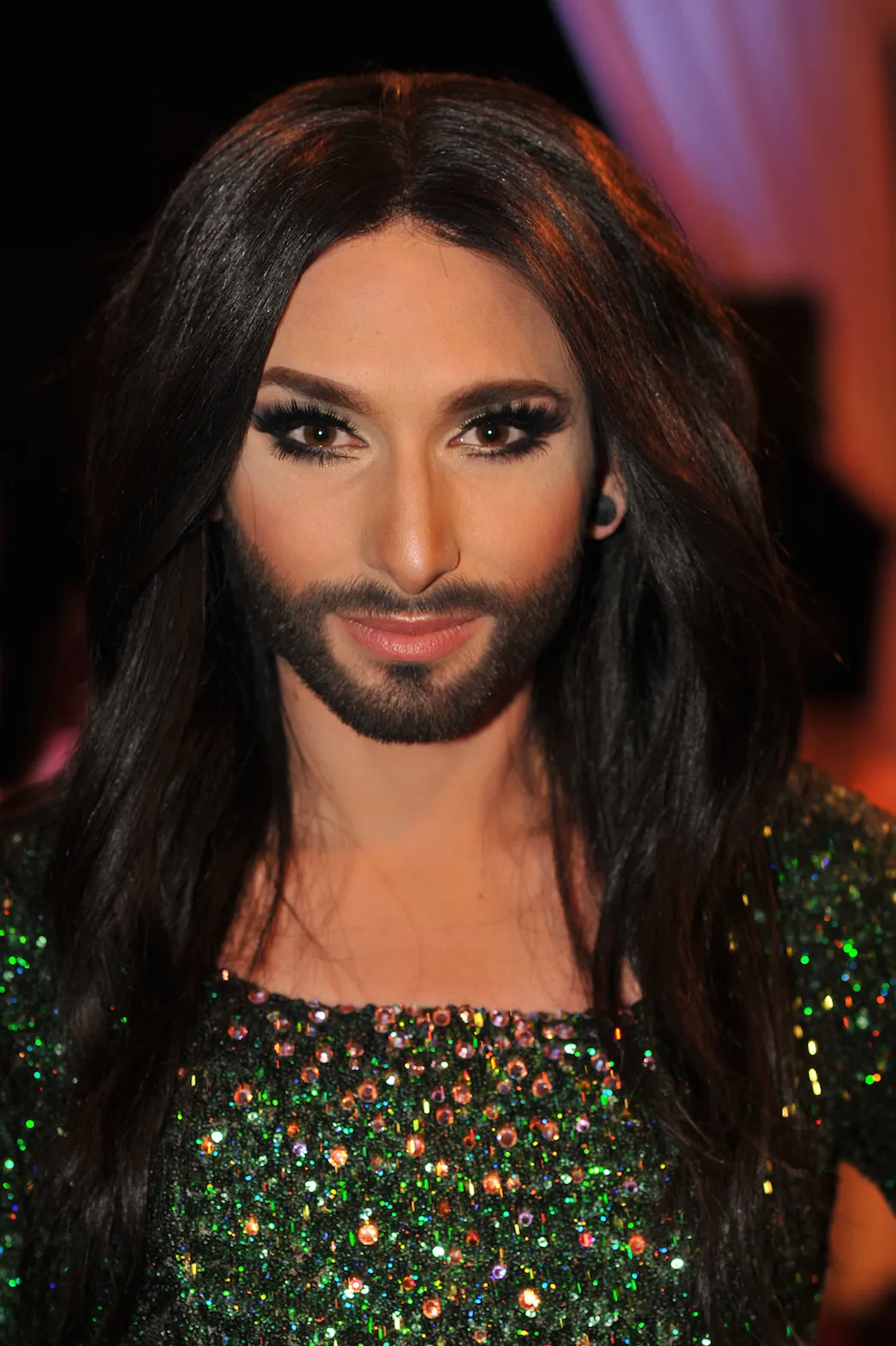






Conchita Wurst: Artistic Transformation and Cultural Impact
Conchita Wurst has established herself as one of the most culturally significant European artists of the past decade, transcending her Eurovision Song Contest victory to become a powerful symbol of acceptance and diversity. At 35, the Austrian singer, drag performer, and activist continues to challenge conventional notions of gender through artistic expression while advocating for LGBTQ+ rights and HIV awareness on international platforms.
Early Years and Identity Formation
Born Thomas Neuwirth on November 6, 1988, in the small town of Gmunden, Austria, Conchita’s early life unfolded in the conservative rural environment of Bad Mitterndorf in Styria. This setting, while picturesque, presented significant challenges for a young person exploring identity and self-expression outside mainstream expectations.
“Growing up in a small village meant constantly navigating between being yourself and meeting community expectations,” Neuwirth recalled in a 2018 interview. “There’s a certain resilience you develop when you don’t quite fit the predetermined mold—you either break or you find strength in your difference.”
Despite these challenges, Neuwirth found early support within the immediate family environment. This foundation would prove crucial in the development of the confidence needed to eventually create and inhabit the Conchita Wurst persona on international stages.
Education provided an initial pathway toward creative expression, with Neuwirth studying fashion design at Graz School of Fashion. This formal training in visual aesthetics and garment construction would later influence the meticulously crafted visual presentation that became integral to Conchita’s artistic identity.
“Even in design school, Thomas showed a sophisticated understanding of how appearance shapes perception,” remembered a former instructor. “There was always this thoughtfulness about presentation—not just creating beautiful things, but understanding how they communicate identity and challenge expectations.”
Early Career and Persona Development
Neuwirth’s first encounters with public recognition came through Austrian television, with appearances on talent competition shows including the 2007 casting show Starmania and the 2011 talent show Die große Chance. These early performances, while not immediately catapulting to major fame, provided valuable experience in navigating media environments and public reception.
The creation of Conchita Wurst represented a pivotal creative and personal evolution. The character—featuring the distinctive combination of traditionally feminine appearance with a full beard—was conceived not merely as a performance vehicle but as an artistic statement challenging gender binaries and social expectations.
“Conchita wasn’t created just to be provocative, though that element exists,” explained a collaborator who worked with Neuwirth during this formative period. “The persona emerged from genuine artistic and personal exploration—questioning why certain combinations of presentation are deemed acceptable while others are taboo.”
The name itself carried symbolic weight: “Conchita” was inspired by a Cuban friend, while “Wurst” (German for “sausage”) playfully referenced the German expression “das ist mir wurst,” meaning “I don’t care” or “it’s all the same to me”—an early indication of the boundary-challenging philosophy that would define the artistic project.
This period of development included careful refinement of Conchita’s visual aesthetic, vocal style, and public positioning. Colleagues from this time note Neuwirth’s strategic approach to creating a persona that would communicate powerful messages about acceptance while remaining accessible to mainstream audiences.
Eurovision Breakthrough and Global Recognition
Conchita Wurst’s participation in the 2014 Eurovision Song Contest marked a transformative moment not only for Neuwirth’s career but for the international cultural conversation around gender expression and LGBTQ+ visibility. The selection as Austria’s representative sparked immediate controversy, with petitions against Conchita’s participation circulating in multiple European countries.
Rather than retreating from this backlash, Neuwirth incorporated the resistance into Conchita’s narrative, positioning the performance as a statement against discrimination. The chosen song, “Rise Like a Phoenix”—a dramatic ballad with orchestral accompaniment reminiscent of classic James Bond themes—provided the perfect musical vehicle for this message of resilience and transformation.
The performance on May 10, 2014, became an instant cultural watershed moment. Conchita’s flawless vocal delivery, combined with the striking visual impact of a gold gown and full beard, created an unforgettable television moment that transcended the contest itself. The subsequent victory—Austria’s first since 1966—transformed Conchita from controversial participant to international symbol.
“What made Conchita’s Eurovision moment so powerful was the combination of absolute technical excellence with boundary-pushing presentation,” observed a Eurovision historian. “By delivering such a vocally impeccable performance, Neuwirth forced viewers to confront their preconceptions—you couldn’t dismiss Conchita on artistic grounds, so you had to examine your reaction to the gender nonconformity.”
The victory speech further cemented Conchita’s cultural significance, with the declaration “We are unity, and we are unstoppable” becoming a rallying cry for acceptance. The moment represented one of the contest’s most politically resonant victories, occurring against the backdrop of increasing anti-LGBTQ+ legislation in several European countries.
Post-Eurovision Career Development
Following the Eurovision triumph, Conchita faced the challenge common to contest winners: translating momentary global attention into sustainable artistic relevance. Rather than rushing to capitalize on sudden fame, Neuwirth took a measured approach to establishing Conchita as a multifaceted artist beyond the competition context.
The debut album “Conchita” (2015) showcased this strategy, featuring the Eurovision-winning track alongside new material spanning various genres from traditional pop to electronic dance influences. Music critics noted the project’s production quality and Conchita’s vocal versatility, though some questioned whether the diverse stylistic approaches reflected artistic exploration or uncertainty about creative direction.
“The first album represented Conchita finding a musical identity beyond the Eurovision moment,” explained a music producer familiar with the project. “There was enormous pressure to quickly define what ‘Conchita music’ should sound like—a challenge made more complex because the persona had initially been defined more by visual presentation and symbolic meaning than by specific musical aesthetic.”
This period also saw Conchita leveraging newfound visibility to access prestigious platforms, including performances at the European Parliament, the United Nations Office in Vienna, and major Pride events worldwide. These appearances strategically positioned Conchita not merely as an entertainer but as a cultural ambassador for LGBTQ+ acceptance.
Artistic Evolution and Identity Exploration
As Conchita’s career progressed, Neuwirth began publicly exploring the relationship between performer and persona, gradually revealing more complex perspectives on gender and identity. This evolution became particularly evident in the 2017 announcement that the strictly feminine presentation would be occasionally set aside for performances under the name “WURST,” featuring a more masculine appearance while maintaining the signature beard.
“The evolution of Conchita into sometimes Wurst reflects the authentic journey many people experience with gender expression,” noted an LGBTQ+ culture scholar. “Rather than presenting a static character, Neuwirth has allowed the artistic persona to grow and change, making the project a genuine exploration rather than a fixed statement.”
This artistic development continued with the 2018 album “From Vienna with Love,” a collaboration with the Vienna Symphony Orchestra that represented a significant musical departure. The project, featuring interpretations of classic pop songs alongside orchestral works, demonstrated growing artistic ambition beyond traditional pop frameworks.
The 2019 release “Truth Over Magnitude” marked an even more dramatic reinvention, embracing electronic and industrial musical elements while adopting a darker, more abstract visual aesthetic. This evolution surprised some fans attached to the glamorous Eurovision image but earned critical respect for its artistic risk-taking.
“What’s fascinating about Neuwirth’s career trajectory is the willingness to potentially alienate the audience that first embraced Conchita,” observed a European music journalist. “Many artists in similar positions would maintain a safe, consistent image to preserve their fanbase, but there’s been a consistent prioritization of authentic expression over commercial calculation.”
Personal Revelations and Advocacy
In April 2018, Neuwirth made the significant decision to publicly disclose Conchita’s HIV-positive status, explaining that the announcement was made to preempt threatened blackmail. This moment of vulnerability transformed into another platform for advocacy, as Conchita began incorporating HIV awareness messages into public appearances.
“The disclosure about HIV status demonstrated the same courage that characterized the creation of Conchita in the first place,” stated an AIDS awareness organization representative. “By refusing to be shamed and instead using the experience to educate, Neuwirth turned a potential personal crisis into another opportunity for social impact.”
This pattern—converting personal challenges into advocacy platforms—has become characteristic of Neuwirth’s public presence. Whether addressing body image, mental health, or relationship dynamics, the approach consistently emphasizes transparency and the universal aspects of human experience regardless of gender or sexual identity.
Friends describe Neuwirth as remarkably grounded despite the extraordinary nature of Conchita’s public journey. “There’s a separation between the stage persona and private life that allows for both spectacular public expression and normal human relationships,” explained a longtime associate. “Thomas has maintained core friendships from before fame and approaches new relationships with refreshing directness.”
Cultural Impact and Symbolic Significance
As Conchita’s career has evolved, cultural commentators have increasingly recognized the project’s significance beyond entertainment. Academic analysis has examined how Conchita’s combination of traditionally masculine and feminine signifiers challenges fundamental cultural assumptions about gender as a binary construct.
“What makes Conchita culturally significant is the way the persona embodies contradiction without attempting to resolve it,” explained a gender studies professor. “By presenting feminine glamour alongside a traditionally masculine signifier like a beard—and doing so with complete confidence—Conchita forces viewers to confront how arbitrary many gender expectations actually are.”
This impact extends beyond academic discussion into practical visibility for gender-nonconforming individuals. Youth workers have reported the “Conchita effect” in providing reference points for young people exploring gender expression, particularly in more conservative regions.
“Before Conchita, many young people questioning gender norms had few mainstream reference points,” noted a European LGBTQ+ youth advocate. “Seeing someone achieve international success while explicitly challenging these norms created permission for personal exploration that didn’t previously exist in many communities.”
Political leaders and cultural institutions have acknowledged this impact through various honors, including Austria’s prestigious Amadeus Awards and the Petrarca Award for European integration. Conchita’s portrait has been added to Vienna’s prestigious Kunsthistorisches Museum, symbolically placing the contemporary gender-challenging figure alongside historical royal portraits.
Media Representation and Critical Response
Conchita’s reception across international media landscapes has provided a fascinating case study in evolving attitudes toward gender nonconformity. Initial coverage often focused on the “bearded lady” spectacle aspect, frequently employing sensationalist framing that emphasized perceived contradiction rather than artistic intent.
As Conchita’s presence became more established, media treatment gradually evolved toward more nuanced exploration of the artistic project’s meaning and Neuwirth’s intentions. This transition—from novelty to normalized cultural figure—has itself become a subject of media studies analysis.
“The evolution of how mainstream publications discussed Conchita between 2014 and 2020 reflects broader societal shifts in understanding gender diversity,” noted a media analyst. “Coverage moved from ‘explain this strange phenomenon’ to treating Conchita as an established artist whose gender expression is one aspect of a multifaceted creative identity.”
Critical reception of Conchita’s musical output has similarly matured, with reviews increasingly evaluating performances and recordings on artistic merit rather than as curiosities. Music critics have particularly noted vocal development over time, with technical refinement complementing the powerful emotional delivery that first captured attention at Eurovision.
Contemporary Projects and Future Direction
Recent years have seen Neuwirth continue to expand Conchita’s artistic parameters while also developing projects outside the established persona. Television hosting opportunities, including for the Eurovision Song Contest itself, have showcased communication skills and comfort across different performance contexts.
The 2021 project “Truth Over Magnitude Alive” demonstrated continued interest in pushing aesthetic boundaries, combining electronic music production with more abstract visual presentation. This evolution reflects Neuwirth’s consistent refusal to allow Conchita to become a static character defined solely by the 2014 breakthrough moment.
“What’s remarkable about Conchita’s career longevity is how it’s been sustained through constant reinvention rather than repetition,” observed a concert promoter who has worked with Neuwirth over multiple years. “Each tour or album introduces new elements while maintaining the core values of authenticity and boundary-challenging that defined the project from the beginning.”
Beyond performing, Neuwirth has expanded into creative direction and fashion design, applying the visual storytelling skills developed through Conchita to other contexts. These ventures suggest a long-term vision for creative expression that may eventually transcend the specific Conchita persona while maintaining its philosophical foundations.
Legacy and Lasting Influence
As Conchita Wurst approaches the decade mark since the career-defining Eurovision victory, cultural historians have begun assessing the lasting impact of this unique artistic project. Beyond specific achievements in music and performance, Conchita’s most significant contribution may be in demonstrating how art can function as both entertainment and social catalyst without sacrificing either purpose.
“Conchita represents a masterclass in using mainstream platforms for progressive messages,” concluded a cultural critic. “By wrapping challenging ideas in spectacular entertainment and genuine artistic quality, Neuwirth created something that couldn’t be easily dismissed or marginalized—forcing conversations in contexts where they might otherwise never have occurred.”
For younger artists exploring gender expression through performance, Conchita has provided both inspiration and practical precedent for creating work that challenges norms while achieving commercial viability. This influence extends beyond LGBTQ+ performers to any artist interested in using their platform for social commentary.
Perhaps most significantly, Conchita Wurst’s success has helped expand the parameters of what European pop culture can encompass—creating space for artistic expressions that might previously have been relegated to niche or underground contexts. This boundary-expanding function continues as Neuwirth evolves both the Conchita persona and other creative projects.
“The ultimate achievement of Conchita Wurst isn’t just personal success or even increased LGBTQ+ visibility,” reflected an arts administrator who has worked with Neuwirth. “It’s demonstrating that supposedly ‘challenging’ art can connect with mainstream audiences if presented with confidence and excellence—a lesson that has implications far beyond any single performer or identity category.”
As both Thomas Neuwirth and Conchita Wurst continue to evolve, this foundational commitment to authentic expression regardless of convention remains the defining characteristic of an artistic journey that has already left an indelible mark on contemporary European culture