
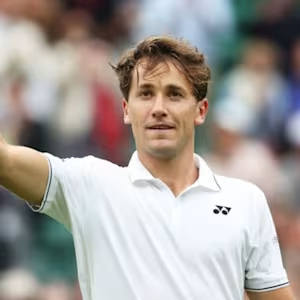






Casper Ruud: Norway’s Tennis Pioneer and Global Clay Court Specialist
Casper Ruud has emerged as one of the most formidable forces in men’s tennis, breaking new ground as a Norwegian player in a sport traditionally dominated by nations with deeper tennis histories. At 25, he has already achieved milestones unprecedented in Norwegian tennis, including multiple Grand Slam finals appearances and a career-high ATP ranking of No. 2 in the world. With his methodical playing style, exceptional clay court prowess, and understated professionalism, Ruud has established himself as both a national sporting icon in Norway and a respected presence on the global tennis stage.
Early Life and Family Tennis Heritage
Born in Oslo, Norway on December 22, 1998, Ruud grew up in an environment where tennis was more than just a recreational activity. His father, Christian Ruud, had been Norway’s leading tennis player throughout the 1990s, reaching a career-high ranking of No. 39 in the world and competing in Grand Slam tournaments against legends like Andre Agassi and Pete Sampras. This family connection provided the younger Ruud with both a genetic predisposition for tennis excellence and firsthand exposure to professional tennis culture from his earliest years.
Unlike many tennis prodigies who train intensively from preschool age, Casper’s introduction to systematic training came relatively later, around age 11. This measured approach to early development may have contributed to his sustainable career trajectory, avoiding the burnout that affects many young players pushed too intensively too early.
“My father knew exactly when to push and when to step back,” Ruud has explained in interviews. “He had experienced the professional tour himself, so he understood the long-term perspective needed to develop properly. I never felt pressured as a child—tennis was always something I genuinely enjoyed.”
This father-son coaching relationship proved remarkably successful and enduring. While many promising juniors eventually outgrow parental coaching, Christian Ruud has remained central to his son’s coaching team throughout his professional rise, providing tactical guidance complemented by additional technical coaches brought in to address specific aspects of Casper’s game.
Formative Years and Rafael Nadal Influence
The defining strategic decision in Ruud’s development came in 2018 when, at age 19, he began training regularly at the Rafa Nadal Academy in Mallorca, Spain. This decision reflected both practical considerations—seeking improved training conditions compared to snow-bound Norway during winter months—and a deliberate stylistic alignment with clay court tennis at the highest level.
The influence of Nadal and his coaching team on Ruud’s game is evident in several aspects of his play: the heavy topspin forehand, tactical patience in constructing points, and the physical conditioning required for clay court excellence. Beyond technical elements, Ruud has frequently credited the Academy environment with shaping his professional habits and competitive mentality.
“Training there exposed me to a level of professionalism and work ethic that changed my perspective completely,” Ruud told ATP Tour magazine. “Seeing how Rafa approached every practice session, his attention to detail, his respect for the sport—these things had as much impact on my development as any technical adjustments.”
This mentorship relationship with Nadal would later evolve into a mutual respect between competitors, culminating in their meeting in the 2022 French Open final—a full-circle moment that symbolized Ruud’s emergence from promising student to legitimate Grand Slam contender.
Professional Development and Clay Court Specialization
Ruud turned professional in 2015 at age 17, working through the challenging Futures and Challenger circuits that form the developmental pathway in professional tennis. His progress was steady rather than meteoric, reflecting a pattern of methodical development rather than overnight sensation.
While many emerging players develop all-court games to maximize tournament opportunities, Ruud and his team made the strategic decision to emphasize clay court specialization early in his career. This focus allowed him to build confidence through results on his preferred surface while systematically addressing the technical adjustments needed for hard and grass courts.
This surface specialization yielded results in 2020 when Ruud claimed his first ATP title at the Argentina Open in Buenos Aires, becoming the first Norwegian to win an ATP tournament. Rather than an isolated breakthrough, this victory initiated a pattern of clay court success, with Ruud capturing additional titles in Geneva, Båstad, Gstaad, and Kitzbühel over the following seasons.
Tennis analysts have noted the tactical sophistication that underpins Ruud’s clay court excellence. Unlike power players who overwhelm opponents with sheer velocity, Ruud employs a more nuanced approach built around:
- A heavy topspin forehand that creates extreme bounces on clay
- Strategic court positioning that balances defense and offense
- Superior physical conditioning that enables consistent performance in extended rallies
- Tactical patience to construct points methodically rather than seeking immediate winners
Former world No. 1 Mats Wilander has described Ruud’s approach as “clay court tennis in its most intelligent form,” noting that “he understands the surfaces and adapts his tactical approach accordingly, which is rarer than you might expect even at the highest level.”
Grand Slam Breakthroughs and ATP Rankings Rise
While Ruud’s initial success came predominantly at ATP 250 events, his breakthrough into tennis’s elite tier occurred during a remarkable 2022 season that saw him reach two Grand Slam finals and achieve a career-high ranking of No. 2 in the world.
His first major final came at the 2022 French Open, where his clay court expertise carried him through the draw until facing mentor Rafael Nadal in the championship match. Though defeated in straight sets, the experience of competing in his first Grand Slam final provided valuable exposure to tennis’s biggest stage.
More surprisingly to tennis observers, Ruud followed this clay court success with a run to the US Open final later that year, demonstrating significant improvement on hard courts and disproving critics who had labeled him a one-surface specialist. This performance, combined with consistent results throughout the season, propelled him to the No. 2 ranking—the highest ever achieved by a Norwegian tennis player and a remarkable achievement for a player from a nation with minimal tennis tradition.
“What impressed me most about Casper’s breakthrough season wasn’t just reaching the finals, but how he handled the increased pressure and visibility,” noted his coach Pedro Clar, who works alongside Christian Ruud. “Many players achieve one big result and then struggle with the new expectations. Casper maintained his focus on daily improvement regardless of the ranking jumps.”
Ruud reinforced his Grand Slam credentials by reaching a second consecutive French Open final in 2023, establishing himself as one of the most consistent performers at Roland Garros. While still seeking his first major title, his repeated presence in the latter stages of Grand Slam events has placed him firmly among the sport’s elite competitors.
Playing Style and Technical Analysis
Standing 6’0″ with an athletic build developed through meticulous physical conditioning, Ruud possesses neither the towering height of many modern players nor the explosive speed of smaller counterparts. Instead, he has developed a game built around tactical intelligence, consistency, and precise shot selection.
The foundation of Ruud’s game is his forehand, hit with extreme western grip that generates exceptional topspin—measured at an average of 3,200 RPM in technical analyses, placing it among the heaviest forehands on tour. This shot becomes particularly effective on clay, where the high bounces it creates force opponents into uncomfortable striking positions.
While his backhand was once considered a relative weakness, systematic technical refinement has transformed it into a reliable shot, particularly when hit down the line to change direction in rallies. His serving, once merely functional, has developed into a weapon that regularly produces both aces and advantageous court positioning for follow-up shots.
Beyond specific strokes, what distinguishes Ruud’s game is his exceptional court sense and tactical adaptability. Tennis strategy analysts have noted his ability to identify and exploit opponent patterns mid-match, adjusting his own positioning and shot selection accordingly.
“What separates Casper from many players with similar technical skills is his tennis IQ,” observed former champion Jim Courier during commentary. “He plays with a maturity and tactical awareness that you typically associate with players much deeper into their careers.”
This intelligent approach extends to his physical conditioning program, which emphasizes endurance and recovery capabilities rather than explosive power alone. Working with fitness coach Marcel Vos, Ruud has developed exceptional stamina that becomes particularly valuable in the latter stages of five-set matches and during the grueling clay court season.
Commercial Presence and Brand Partnerships
Ruud’s rise in the rankings has been accompanied by increasing commercial visibility, though his endorsement portfolio reflects his understated personal style rather than flashy self-promotion. His equipment sponsor Yonex features him prominently in their marketing for both racquets and apparel, while additional partnerships with Norwegian companies like investment firm Ferd and telecommunications provider Telenor reflect his strong domestic appeal.
Unlike many tennis stars who maintain homes in traditional tax havens, Ruud has maintained strong connections to Norway, contributing to his popularity as an authentic national sporting figure. This authenticity extends to his commercial choices, with brand partnerships that align with his measured public persona rather than attempting to reposition him as a fashion icon or lifestyle influencer.
“In commercial terms, Casper represents something increasingly valuable in today’s marketplace: authentic expertise and quiet excellence,” noted sports marketing specialist Maria Sennels. “Not every athlete needs to be an outspoken personality or controversial figure to build significant commercial value. There’s substantial appeal in his consistent performance and understated professionalism.”
This commercial approach has positioned Ruud within a valuable niche in tennis marketing—appealing to traditionalists who appreciate his respect for the sport’s history and focus on performance rather than persona. This alignment with tennis’s traditional values has made him particularly appealing to equipment manufacturers and performance-focused brands seeking credible technical ambassadors.
Personal Life and Off-Court Interests
Despite his increasing public profile, Ruud has maintained a relatively private personal life, offering glimpses of his off-court interests without the comprehensive social media documentation common among many of his contemporaries. What emerges from these glimpses is a picture of balanced interests beyond tennis, particularly outdoor activities that reflect his Norwegian upbringing.
An avid golfer with a reported handicap in the single digits, Ruud often spends recovery days on golf courses during tournaments, finding the different physical demands and mental focus of golf complementary to his tennis regimen. This interest has led to friendly competitions with other tennis players who share his enthusiasm for golf, including occasional matches with Rafael Nadal during training blocks in Mallorca.
Beyond golf, Ruud maintains connections to various outdoor activities typical of Norwegian culture, including skiing during his limited off-season time at home. These interests reflect a broader life philosophy that emphasizes balance and perspective even amid the demands of professional tennis.
“Growing up in Norway gives you a certain perspective,” he explained in a rare personal interview. “There’s a cultural emphasis on outdoor life, on finding joy in simple activities, that I think helps maintain perspective when tennis becomes intense. The mountains and forests are still there regardless of whether you won or lost your last match.”
This grounded perspective extends to his approach to fame and recognition. While acknowledging his role as a pioneer for Norwegian tennis, Ruud has consistently redirected attention from personal accomplishments to the broader goal of growing tennis participation in his home country. Rather than positioning himself as exceptional, he describes his success as evidence of what’s possible for future Norwegian players with proper support and development.
Impact on Norwegian Tennis and National Identity
Perhaps Ruud’s most significant contribution transcends his individual achievements to encompass his broader impact on tennis in Norway. In a nation traditionally dominated by winter sports—with cross-country skiing, biathlon, and Nordic combined occupying the prime positions in national sporting consciousness—Ruud has elevated tennis from niche status to mainstream visibility.
Television ratings for his Grand Slam finals appearances have broken records for tennis viewership in Norway, while participation rates in junior tennis programs have reportedly increased by over 30% since his emergence as a top-10 player. These impacts reflect not just the “hero effect” common when nations produce exceptional athletes, but also Ruud’s specific approach to representing Norway internationally.
“Casper embodies certain qualities that resonate deeply with Norwegian cultural values,” observed sports sociologist Dr. Lars Tjørnhom from the University of Oslo. “His work ethic, humility, and focus on steady improvement rather than dramatic gestures aligns with traditional Norwegian perspectives on achievement and public conduct.”
This cultural alignment has made Ruud a compelling figure in discussions of modern Norwegian identity, representing the nation’s increasing global presence while maintaining connections to traditional values. His success has coincided with other Norwegian athletes achieving international prominence, including soccer striker Erling Haaland and chess grandmaster Magnus Carlsen, creating a moment of unprecedented global sporting visibility for the nation.
The Tennis Federation of Norway has worked strategically to capitalize on Ruud’s success, investing in improved facilities and coaching development while using his visibility to attract corporate partnerships that fund grassroots programs. Rather than emerging from a systematic national development program, Ruud has instead inspired the creation of more robust systems to nurture future Norwegian players.
“The real measure of Casper’s impact won’t be just his own achievements,” noted federation president Aslak Paulsen. “It will be whether his success creates a sustainable tennis culture in Norway that produces not just one exceptional player, but a continuous pipeline of Norwegian competitors on the international stage.”
Future Outlook and Career Trajectory
At 25, Casper Ruud stands at a pivotal point in his tennis career—young enough to have significant development potential remaining, yet experienced enough to have established patterns of strengths and limitations. Tennis career analysts suggest several factors will determine his ultimate place in tennis history:
- Grand Slam Breakthrough: While reaching multiple major finals represents exceptional achievement, capturing a first Grand Slam title would elevate Ruud’s historical standing significantly. His consistent presence in the latter stages of majors suggests this breakthrough remains a realistic possibility.
- Surface Versatility: Continuing to improve results on hard courts and grass would transform Ruud from a clay court specialist to a more complete all-surface threat, increasing his opportunities for major titles beyond Roland Garros.
- Offensive Evolution: Technical analysts have noted Ruud’s ongoing work to add more offensive elements to his naturally defensive game, particularly in developing more penetrating flat shots to complement his topspin-heavy default patterns.
- Generational Position: Ruud occupies an interesting position between the fading “Big Three” era and the emerging generation of young talents like Carlos Alcaraz and Jannik Sinner. This transitional period potentially offers opportunities as the dominant figures of the previous era retire.
His coach Pedro Clar has emphasized the methodical approach that characterizes their development plan: “We’re not looking for dramatic technical overhauls but rather systematic refinements to specific situations. Casper’s game is built on such a solid foundation that we’re focusing on expanding his tactical options rather than reinventing his approach.”
This measured development philosophy aligns with Ruud’s overall career trajectory—characterized by steady progress rather than dramatic breakthroughs, and by sustainable improvement rather than fleeting peaks. While tennis media often focuses on prodigies who achieve success as teenagers, Ruud represents an alternative path of patient development and strategic specialization.
Legacy and Cultural Significance
Beyond specific tournament victories or ranking achievements, Casper Ruud’s significance extends to his pioneering role in Norwegian sports history and his representation of an alternative pathway to tennis excellence.
In a sport increasingly dominated by powerful baseline hitting and aggressive shot-making, Ruud has demonstrated the continuing viability of a more methodical, tactically sophisticated approach—particularly on clay courts where subtlety and point construction remain paramount. His success offers a counterpoint to the narrative that modern tennis rewards only explosive power and risk-taking.
For tennis culture more broadly, Ruud represents a connection to traditional values of sportsmanship and professionalism in an era often characterized by more theatrical on-court behavior. His calm demeanor during matches, respectful treatment of officials, and gracious handling of both victories and defeats have earned respect even from supporters of his opponents.
“There’s something refreshing about watching Ruud compete,” noted veteran tennis journalist Jon Wertheim. “He brings intensity without drama, competitive fire without unnecessary conflict. In a sport that sometimes seems to reward theatrical behavior, his focus remains entirely on the tennis itself.”
This understated approach extends to his interactions with fellow players, where he has developed a reputation as both a respectful competitor and genuine colleague. Despite the increasingly insular nature of professional tours, where players often travel with extensive personal teams rather than developing peer relationships, Ruud has cultivated positive connections throughout the locker room.
As he continues his career trajectory, Casper Ruud has already secured a place in tennis history as Norway’s greatest player and one of the sport’s most respected competitors. Whether he eventually adds Grand Slam championships to his resume or not, his impact on tennis in Norway and his representation of the sport’s enduring values ensure his legacy extends beyond statistics alone.
In a tennis landscape often dominated by larger-than-life personalities and dramatic narratives, Ruud offers an alternative model of sporting excellence—one built on methodical improvement, surface expertise, tactical intelligence, and quiet professionalism. For a nation with limited tennis tradition, he has not only achieved unprecedented results but has done so in a manner that reflects cultural values Norwegians recognize and appreciate. This authentic alignment between personal conduct and national character may ultimately prove as significant as any tournament victory in establishing Casper Ruud’s lasting legacy.