
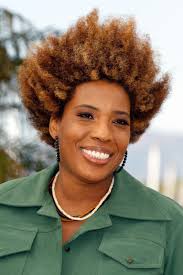






Macy Gray: Unmistakable Voice and Musical Authenticity
Macy Gray has established herself as one of the most distinctive vocal presences in contemporary music, with a career that defies easy categorization while consistently showcasing her unique artistic vision. At 54, the Grammy-winning artist continues to expand her creative horizons across music, film, and advocacy work, maintaining the fearless authenticity that first captured public attention at the turn of the millennium.
Early Years and Unexpected Musical Path
Born Natalie Renée McIntyre on September 6, 1969, in Canton, Ohio, Gray’s journey to musical prominence followed an unconventional trajectory that has become emblematic of her career’s unpredictable nature. Raised in a middle-class Midwestern household, her early life offered few indications of the international music career that would later develop.
Gray’s original creative ambitions focused on writing rather than performing. After moving to California to attend the University of Southern California, she pursued studies in scriptwriting, developing narrative talents that would later influence her distinctive lyrical approach. Classmates from this period recall her as intellectually curious but give no indication that she was particularly focused on musical performance.
“Macy never talked about becoming a singer during our screenwriting seminars,” remembered a former USC classmate. “She was thoughtful and creative, but her voice—which would later become her signature—wasn’t something she seemed to consider a professional asset at that point.”
This changed through a series of serendipitous events that Gray has described as “accidental entry” into musical performance. When a friend’s band needed a last-minute vocalist for a demo recording, Gray reluctantly stepped in, unleashing the raspy, emotionally charged voice that would eventually captivate global audiences.
“The first time I heard Macy sing was genuinely shocking,” recalled a producer who worked on early recordings. “This unassuming person opened her mouth and out came this completely formed, utterly unique vocal instrument. It wasn’t just the raspiness—though that was immediately distinctive—it was the phrasing, the emotional quality, the total originality of her approach.”
Los Angeles Music Scene and Developing Artistry
Following her unexpected introduction to performance, Gray began gradually building a presence in Los Angeles music circles during the mid-1990s. This period of artistic development took place in small clubs and industry showcases, where she refined her distinctive blend of soul, jazz, and R&B while building a reputation among music insiders.
Unlike many artists who emerge with clearly defined artistic personas, colleagues from this period describe Gray’s evolution as organic and unself-conscious. Her unusual vocal qualities initially presented both opportunities and challenges, with some industry figures uncertain how to market a voice that diverged so dramatically from contemporary R&B conventions.
“The Los Angeles music scene in the late ’90s was dominated by very polished R&B vocals,” explained a veteran talent scout. “Macy was offering something completely different—raw, imperfect in the most beautiful way, and utterly authentic. Some people didn’t get it, but those who did recognized she represented something genuinely new.”
This period of development included a brief, unsuccessful deal with Atlantic Records that resulted in a completed but unreleased album. Rather than becoming discouraged, Gray used this setback as an opportunity to further refine her material and performance approach, working with various musicians and producers to develop the sound that would eventually breakthrough commercially.
Commercial Breakthrough and International Recognition
Gray’s persistence paid off when she signed with Epic Records, leading to the 1999 release of her debut album “On How Life Is.” The project’s lead singles generated moderate interest, but it was the album’s third release, “I Try,” that catalyzed her transformation from industry curiosity to global star. The song’s emotional intensity and memorable chorus connected with listeners internationally, eventually reaching the top 5 on the Billboard Hot 100 and achieving even greater success in European markets.
“‘I Try’ represented one of those rare moments when something truly original breaks through to mainstream success without compromising its uniqueness,” noted a music industry analyst. “The song was undeniably commercial, but it didn’t sound like anything else on radio at that moment—it stood out precisely because of the qualities that made Macy distinctive.”
The single’s success propelled “On How Life Is” to multi-platinum status internationally and earned Gray a Grammy Award for Best Female Pop Vocal Performance, along with nominations for Record of the Year and Song of the Year. This level of recognition not only established her commercial credibility but affirmed her artistic approach at the highest levels of the music industry.
Beyond commercial metrics, the album received strong critical acclaim for its fresh approach to soul traditions, with reviewers particularly noting Gray’s lyrical depth and the production’s effective balance of contemporary elements with classic soul influences. This critical appreciation positioned Gray as an artist with substance beyond her breakout hit, creating foundation for a career based on artistic quality rather than fleeting trends.
Artistic Evolution and Creative Expansion
Following the massive success of her debut, Gray made a series of artistic choices that demonstrated her commitment to creative exploration over commercial predictability. Her sophomore album, “The Id” (2001), embraced more experimental arrangements and eclectic influences, ranging from psychedelic soul to funk and even rock elements.
Though less commercially dominant than her debut, “The Id” received strong critical response and helped establish Gray’s reputation as an artist unwilling to simply repeat proven formulas. This pattern continued with subsequent releases like “The Trouble with Being Myself” (2003) and “Big” (2007), each showcasing different facets of her musical vision while maintaining her distinctive vocal approach.
“What’s always impressed me about Macy is her willingness to follow her instincts regardless of commercial considerations,” remarked a producer who worked on several of her projects. “She’s never been interested in chasing trends or meeting market expectations—her priority has always been creating music that feels authentic to her artistic vision.”
This commitment to artistic integrity has resulted in a catalog notable for its diversity and experimentation. From the retro-soul explorations of “Big” to the more electronic-influenced approach of “Ruby” (2018), Gray has consistently confounded expectations while developing a body of work unified by her unmistakable vocal presence and emotional authenticity.
Expansion into Film and Television
While establishing herself as a musical force, Gray simultaneously developed a parallel career as an actress, demonstrating range and naturalness that surprised many initially familiar with her only as a musician. Her film debut in the 2001 drama “Training Day” alongside Denzel Washington revealed genuine acting ability beyond the celebrity cameo level common for musicians transitioning to screen work.
This was followed by appearances in films including “Spider-Man” (2002), “Shadowboxer” (2005), and “For Colored Girls” (2010), along with television roles that showcased different aspects of her performance capabilities. Casting directors have noted Gray’s ability to project authenticity on screen, whether in dramatic or comedic contexts.
“Macy brings the same emotional honesty to acting that characterizes her music,” observed a film director who worked with her. “She has this natural presence that can’t be taught—a quality of being completely herself while inhabiting a character. That’s rare, especially among performers who come to acting from other disciplines.”
This screen work has provided Gray with creative outlets beyond music while also introducing her to audiences who might not have encountered her through her recordings. The complementary relationship between these career aspects has created a multidimensional public presence that transcends typical music industry categories.
Personal Challenges and Advocacy Work
Throughout her career, Gray has navigated various personal challenges with the same authenticity that characterizes her artistic expression. As a mother of three children (Aanisah, Tahmel, and Happy), she has balanced the demands of international career with family responsibilities, often discussing the complexities of this juggling act with refreshing candor.
“The music industry isn’t built for working parents,” Gray noted in a 2019 interview. “There’s this expectation of constant availability—for recording, promotion, touring—that’s fundamentally at odds with being present for your children. I’ve had to create my own approach to managing these competing priorities.”
Beyond parenting, Gray has been open about personal struggles including periods of depression and anxiety. Rather than compartmentalizing these experiences, she has incorporated them into both her artistic expression and her public advocacy work, becoming an outspoken proponent for mental health awareness.
This advocacy extends to other causes, including autism awareness and various social justice initiatives. Colleagues involved in these efforts describe Gray’s approach as substantive rather than superficial, noting her willingness to engage deeply with complex issues rather than offering merely symbolic support.
“What makes Macy’s advocacy meaningful is that it comes from genuine concern rather than image management,” explained a non-profit executive who has worked with her. “She asks thoughtful questions, educates herself about the issues, and leverages her platform in ways that create genuine impact rather than just visibility.”
Vocal Distinctiveness and Musical Approach
Central to Gray’s artistic identity is her immediately recognizable voice—a raspy, emotionally charged instrument that music critics have variously compared to Billie Holiday, Louis Armstrong, and Nina Simone while acknowledging its fundamental uniqueness. Vocal coaches have noted the technical distinctiveness of her approach, which defies conventional categorization.
“Macy’s voice represents a fascinating study in how perceived limitations can become signature strengths,” explained a respected vocal instructor. “The qualities that might be considered ‘flaws’ in a traditional vocal assessment—the raspiness, the limited range, the unconventional phrasing—are precisely what make her instantly identifiable and emotionally compelling.”
This vocal distinctiveness is complemented by Gray’s sophisticated approach to songwriting and arrangement. Throughout her career, she has worked with various collaborators but maintained consistent involvement in composition and production decisions, ensuring her artistic vision remains central regardless of who else contributes to the project.
Lyrically, Gray’s work often combines personal narrative with observational perspective, creating songs that feel simultaneously intimate and universal. Her writing frequently employs unexpected imagery and narrative approaches that reflect her background in scriptwriting, setting her apart from more conventional R&B lyrical frameworks.
“What’s striking about Macy’s songwriting is how it balances accessibility with genuine literary quality,” noted a music journalist. “She can write a hook that lodges immediately in your memory, but surround it with verses that reward close listening and repeated engagement. That’s a rare combination in popular music.”
Industry Relationships and Professional Reputation
Throughout her career, Gray has maintained a reputation for artistic integrity and professionalism that has earned her respect from colleagues across the music industry. Those who have worked with her consistently mention her clear artistic vision, combined with collaborative openness that creates productive creative environments.
“Macy knows exactly who she is as an artist, which gives her collaborators a clear framework,” explained a producer who has worked on multiple projects with her. “But she’s also genuinely interested in what others bring to the table—she has strong opinions without being rigid or controlling, which is a difficult balance many artists never achieve.”
This professional approach has allowed Gray to work successfully with diverse collaborators ranging from established producers like will.i.am and Raphael Saadiq to younger artists from different musical backgrounds. These collaborations have helped her music remain contemporary without seeming calculated or trend-chasing.
Perhaps most notably, Gray has navigated the music industry’s dramatic technological and economic transformations over the past two decades while maintaining artistic relevance and professional sustainability. As physical album sales gave way to downloads and then streaming, she has adapted her business approach while keeping creative expression central.
Legacy and Current Activities
As Gray’s career continues into its third decade, music historians and cultural commentators have increasingly recognized her significant influence on contemporary vocal approaches and genre-blending aesthetics. Numerous younger artists cite her as a foundational influence, particularly in her demonstration that commercial success can be achieved without conforming to standardized vocal or stylistic expectations.
“Macy Gray emerged at a moment when R&B and soul music were dominated by technical perfection and glossy production values,” observed a music historian. “Her success proved there was substantial audience appetite for something more raw and emotionally direct, helping pave the way for the alternative R&B movement that would emerge in the following decade.”
Recent years have seen Gray continue to create on her own terms, releasing music through independent channels that allow greater creative control than her earlier major label arrangements. Her 2018 album “Ruby” demonstrated continued artistic vitality, receiving strong critical response for its sophisticated blend of classic soul elements with contemporary production approaches.
Beyond recording, Gray has maintained an active touring schedule that showcases her growth as a live performer. Concert reviewers consistently note the power of her stage presence and her ability to reinterpret earlier material in ways that keep it fresh while honoring the qualities that originally connected with audiences.
“What’s remarkable about seeing Macy perform now is the perfect balance she strikes between technical refinement and emotional rawness,” wrote a concert reviewer following a recent performance. “Her voice has gained control and nuance without losing the distinctive character that makes it special, and her stage presence reflects the confidence of someone completely comfortable with their artistic identity.”
As she continues to create across multiple disciplines, Macy Gray stands as a powerful example of artistic authenticity’s enduring value in an industry often driven by calculation and conformity. Her legacy encompasses not just her distinctive recordings and performances, but the permission her success has given to subsequent generations of artists to embrace their unique qualities rather than attempting to fit predetermined molds.
In a musical landscape where technological manipulation increasingly allows for the smoothing of distinctive vocal characteristics, Gray’s unmistakable voice and unwavering commitment to artistic integrity serve as powerful reminders of human individuality’s irreplaceable value in creative expression.