
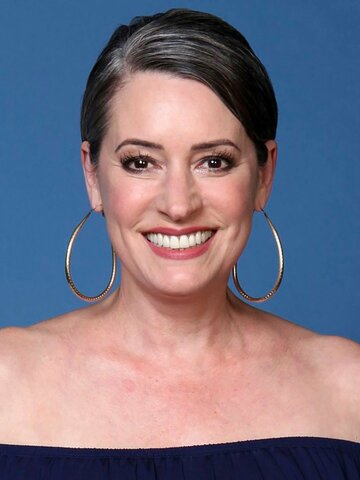






Paget Brewster: Versatility and Resilience in an Evolving Television Landscape
Paget Brewster has established herself as one of television’s most adaptable and enduring presences, building a career that spans procedural dramas, network sitcoms, and animated series with remarkable consistency. At 55, the Massachusetts-born actress has created a body of work characterized by sharp intelligence, subtle emotional depth, and precise comedic timing—qualities that have allowed her to move fluidly between genres while maintaining a distinctive screen presence. Through her iconic role as Emily Prentiss on Criminal Minds, her memorable comedic appearances, and her extensive voice acting work, Brewster has demonstrated an unusual versatility that has kept her consistently employed throughout an industry known for volatility and typecasting.
New England Roots and Early Creative Exploration
Born in Concord, Massachusetts in 1969, Brewster grew up in a household that valued both intellectual pursuits and creative expression. Her father, Galen Brewster, worked as a school administrator, while her mother, Hathaway Brewster, was involved in government—creating an environment that emphasized education, critical thinking, and social awareness.
This family background provided Brewster with a solid intellectual foundation that would later inform her approach to character development and her attraction to roles requiring psychological complexity. Friends and colleagues often note her analytical approach to performance—a quality likely influenced by her early exposure to academic and political discussions.
“I grew up in a household where dinner conversations regularly covered politics, education policy, and social issues,” Brewster told Boston Magazine in a rare interview about her upbringing. “That environment taught me to think critically about human motivation and social systems from a very young age. Those analytical skills became invaluable when approaching characters whose psychology and personal histories needed to feel authentic and fully realized.”
After high school, Brewster initially pursued design studies at the prestigious Parsons School of Design in New York City—a path that, while ultimately abandoned for acting, provided her with visual literacy and aesthetic understanding that would prove valuable throughout her entertainment career. Colleagues from her later work note her particular attention to how costumes, set design, and visual composition contribute to character and narrative—awareness likely developed during her brief but formative period in design education.
Though she left Parsons without completing her degree, this early creative exploration reflects a pattern that would characterize Brewster’s career—a willingness to follow creative instincts across different media and formats rather than pursuing a predetermined professional path. This openness to diverse creative expressions would later manifest in her movement between dramatically different television genres and formats.
San Francisco and Early Television Experience
Brewster’s entertainment career began through an unconventional route when she moved to San Francisco in the early 1990s. Rather than pursuing traditional acting roles immediately, she became the host of Paget, a local late-night talk show on a San Francisco channel that developed a cult following for its irreverent approach and Brewster’s naturally engaging hosting style.
This early television experience provided valuable training in spontaneity, audience engagement, and camera comfort that would serve her well throughout her subsequent acting career. Unlike performers who begin with scripted roles, Brewster’s talk show background gave her experience thinking on her feet and responding naturally to unpredictable situations—skills that would later enhance both her dramatic and comedic work.
“Hosting a talk show as my first television experience was this incredible boot camp,” Brewster explained to The A.V. Club. “You’re simultaneously trying to be yourself while also constructing this slightly heightened on-camera persona. You have to listen actively, respond authentically, and maintain energy regardless of what’s happening. All of those skills transferred directly to acting, particularly in comedy where timing and responsive listening are essential.”
This period in San Francisco also connected Brewster to the city’s vibrant alternative comedy scene, where she developed relationships with performers who would later become significant figures in television comedy. These connections, along with her developing reputation as a naturally quick-witted performer, facilitated her transition from local television personality to professional actress as she began pursuing scripted roles.
Transition to Acting and Early Television Roles
Brewster’s acting career gained momentum when she relocated to Los Angeles in the mid-1990s and began securing guest roles on established television series. Her first significant appearance came on Friends in 1997, where she portrayed Kathy, Joey’s girlfriend who eventually becomes romantically involved with Chandler, creating a classic sitcom love triangle.
Though only appearing in six episodes, Brewster made a strong impression in this early role, demonstrating natural comedic timing while bringing emotional depth to what could have been a purely functional plot device. The performance showcased her ability to step into an already-established ensemble and create immediate chemistry with veteran performers—a skill that would prove valuable throughout her career.
“The Friends experience was this perfect introduction to sitcom work,” Brewster told Entertainment Weekly during a retrospective interview. “I was working with this incredibly well-oiled machine of comedic performers, writers, and directors who had already perfected their approach. Watching how actors like Matt LeBlanc and Matthew Perry developed jokes, found physical comedy moments, and built on each other’s energy was essentially a master class in sitcom technique.”
Following this high-profile guest role, Brewster continued building her television resume with appearances on shows like The Trouble with Normal and a series regular position on the short-lived series The Specials. While these projects achieved limited success, they provided valuable experience in different production environments and helped establish Brewster as a reliable presence who could handle both comedic and more dramatic material.
Her first opportunity as a series lead came with Andy Richter Controls the Universe (2002-2003), a critically praised but commercially underperforming sitcom that showcased her ability to balance comedic absurdity with grounded characterization. As Jessica Green, the caustic marketing executive, Brewster demonstrated her particular gift for delivering sardonic dialogue with both precision and authentic emotional underpinning—creating comedy through character rather than mere joke delivery.
Though the series lasted only two seasons, it established Brewster as someone who could thrive in more sophisticated comedy formats that required both technical precision and psychological nuance. This reputation led to subsequent opportunities in similarly ambitious comedy projects, establishing a pattern where critical respect sometimes outpaced commercial success—a common experience for performers drawn to more innovative television formats.
Finding Dramatic Depth: Emily Prentiss in Criminal Minds
Brewster’s career reached a pivotal moment when she joined the cast of Criminal Minds in its second season, portraying FBI Behavioral Analysis Unit (BAU) agent Emily Prentiss. The role represented her most significant venture into dramatic territory and would ultimately become her most enduring and recognizable character over a decade of intermittent appearances.
As Prentiss, Brewster created a character whose intelligence, composure, and underlying vulnerability resonated strongly with viewers. Unlike procedural characters who often remain relatively static over multiple seasons, Prentiss experienced significant evolution—from her introduction as the somewhat mysterious newcomer to the team through emotional trauma, apparent death and resurrection, and eventually leadership positions within the BAU.
“What made Prentiss such a rewarding role was her complexity beneath the professional exterior,” Brewster explained in an interview with TV Guide. “She presented this image of absolute competence and emotional control, but we gradually revealed layers of vulnerability, trauma, and unexpected personal history. Finding ways to suggest that interior life while maintaining her professional facade created this interesting tension that kept the character evolving even within the procedural format.”
The role required Brewster to navigate the specific challenges of crime procedurals—delivering extensive technical dialogue convincingly, maintaining character consistency across standalone episodes, and finding fresh emotional responses to repeatedly disturbing content. Colleagues from the series note her particular skill at making expository dialogue feel natural and her ability to bring subtle variation to the familiar rhythms of procedural storytelling.
“What distinguished Paget’s performance as Prentiss was her ability to make psychological profiles and technical explanations sound like actual human speech rather than information delivery,” observed a Criminal Minds writer. “She found ways to personalize these necessarily functional moments so they revealed character while serving the plot. That’s incredibly difficult in procedural formats where so much dialogue exists primarily to move the story forward.”
Beyond these technical challenges, the role of Prentiss also demanded emotional range that extended well beyond Brewster’s previous comedic work. Storylines involving Prentiss’s traumatic past, her experience being tortured by an international criminal, and her complex relationships with team members required dramatic depths that showcased Brewster’s previously untapped capabilities as a dramatic actress.
The character became particularly significant for female viewers, who responded to Prentiss’s portrayal as a competent professional woman whose emotional life enhanced rather than undermined her effectiveness. Unlike procedural characters whose personal struggles often function as obstacles to overcome, Prentiss’s emotional experiences were presented as sources of insight and empathy that made her a more effective agent—a nuanced approach that distinguished the character from more one-dimensional strong female characters.
Brewster’s relationship with Criminal Minds took several unexpected turns over the years, including her departure from the series in 2012 due to reported budget cuts, her return as a guest star, and ultimately her full return as a series regular—a trajectory that demonstrated both her importance to the show’s success and her professional flexibility in navigating the often unpredictable business realities of long-running television series.
Animation and Voice Acting: A Parallel Career
While building her on-screen career, Brewster simultaneously developed an extensive portfolio as a voice actress in animation—work that allowed her to explore different performance capabilities while providing career stability independent of her live-action opportunities. Beginning with Harvey Birdman, Attorney at Law in the early 2000s, where she voiced various characters including Birdgirl, she demonstrated exceptional vocal versatility and comedic timing specifically adapted to animation requirements.
This parallel career expanded to include roles in series like American Dad!, Bojack Horseman, the 2017 reboot of DuckTales (as Della Duck), Batman: The Dark Knight Returns, and many others—establishing Brewster as one of the industry’s most reliable and versatile voice performers. Animation directors consistently mention her technical precision, character distinctiveness, and efficiency in recording sessions—qualities that make her particularly valuable in the fast-paced world of television animation.
“Voice acting requires this very specific skill set that’s different from both on-camera and stage work,” Brewster explained to Animation Magazine. “You’re creating a complete character using only your voice, often working in isolation rather than with other performers. That demands incredible precision with timing, emotional shifts, and character consistency while also maintaining the energy and spontaneity that makes animation feel alive rather than merely recited.”
What distinguishes Brewster’s animation work is her ability to create vocally distinctive characters that remain recognizably human rather than merely cartoonish. Even in highly stylized productions, her characters maintain psychological consistency and emotional authenticity that enhance the narrative rather than merely providing comedic exaggeration.
This voice acting work has provided not only creative satisfaction but also career stability—a significant consideration in an industry where on-camera opportunities can fluctuate based on factors beyond performer control. By establishing herself in both live-action and animation, Brewster created multiple professional pathways that collectively resulted in remarkable career consistency across decades of industry change.
“Animation has been this wonderful constant throughout my career,” Brewster told The Hollywood Reporter. “When live-action projects end or during periods between series, voice work continues providing both creative fulfillment and practical stability. There’s something liberating about creating characters purely through voice—it removes all the physical concerns of on-camera work and focuses entirely on the emotional and comedic essence of performance.”
Comedy Resurgence and Genre Flexibility
While Criminal Minds established Brewster as a dramatic actress, she maintained connections to her comedic roots through guest appearances and recurring roles in sitcoms and comedy series throughout her career. Her appearances on shows like Two and a Half Men, Law & Order: Special Victims Unit, and Modern Family demonstrated her ability to move between comedy and drama with unusual ease—a flexibility that kept her consistently employed while allowing creative variety.
This comedic side of her career experienced a particular resurgence when she appeared as Frankie Dart in the sixth season of the cult comedy Community. As the pragmatic organizational consultant brought in to help revitalize Greendale Community College, Brewster brought deadpan delivery and subtle character work to a show known for its meta-humor and pop culture awareness.
“Community represented this perfect opportunity to return to comedy while still using the dramatic skills I’d developed on Criminal Minds,” Brewster explained during a Comic-Con panel. “Frankie needed to be simultaneously the straight woman reacting to the group’s absurdity and a complex character with her own specific worldview and vulnerabilities. Finding that balance—being the ‘normal’ one without becoming merely functional or boring—was a fascinating challenge that combined everything I’d learned from both comedy and drama.”
This comedic thread continued with her role in Grandfathered (2015-2016), where she portrayed Sara Kingsley, the former girlfriend of John Stamos’s character who returns to his life after he discovers he has a son and granddaughter. The role allowed Brewster to blend romantic comedy elements with more grounded emotional moments—another example of her ability to find nuance within potentially conventional character types.
What distinguishes Brewster’s approach to both comedy and drama is her consistent emphasis on character truth rather than technical display. Colleagues from both genres note her preference for finding humor or emotional depth through authentic character behavior rather than imposed technique—an approach that creates consistency across her diverse projects despite their different tonal requirements.
“Paget has this remarkable ability to maintain her distinct intelligence and timing while completely adapting to the tone of whatever project she’s working on,” observed a director who has worked with her in both comedic and dramatic contexts. “She’s not a different performer in comedy versus drama—she’s bringing the same fundamental tools of observation, precision, and emotional honesty to each genre but adjusting how those qualities manifest based on the specific requirements of the project.”
This adaptability across genres has become increasingly valuable in a television landscape where traditional distinctions between comedy and drama have blurred significantly. As more series incorporate elements of both genres, performers capable of navigating these tonal shifts without apparent effort become particularly valuable—positioning Brewster ideally for the hybrid formats that increasingly dominate contemporary television.
Professional Reputation and Working Style
Throughout her career, Brewster has developed a reputation as a technically precise, thoroughly prepared performer whose reliability makes her particularly valuable in television production environments. Directors and showrunners consistently mention her efficiency, adaptability to production changes, and capability for delivering consistent performances despite the often challenging schedules of television filming.
“What makes Paget such an asset on set is her combination of absolute preparedness and spontaneous adaptability,” noted a Criminal Minds director. “She arrives knowing her lines cold, understanding her character’s psychological state, and with clear ideas about performance approach—but remains completely open to adjustments, new interpretations, or last-minute script changes. That balance of thoroughness and flexibility is exactly what television production needs but doesn’t always find.”
This professional approach extends to Brewster’s collaborative work with writers and fellow performers. Colleagues mention her particular skill at elevating material through subtle performance choices and her generosity in supporting scene partners rather than seeking to dominate shared screen time—qualities that make her especially effective in ensemble productions.
“Paget has this wonderful quality of making everyone around her better,” observed a former co-star. “She’s incredibly attentive to the overall scene rather than just her own performance—finding ways to support other actors’ moments, picking up on subtle cues that create genuine interaction rather than parallel performances. That generosity creates this atmosphere of mutual trust that improves everyone’s work.”
This supportive approach likely stems from Brewster’s genuine interest in the collaborative aspects of television production rather than merely her individual performance. Interviews throughout her career reveal consistent appreciation for the collective creativity of television—the ways writers, directors, performers, and technical crews combine their specific expertise to create cohesive stories and characters.
“Television at its best is this extraordinary collaborative art form where diverse talents converge to create something none of us could achieve individually,” Brewster told The New York Times. “Understanding and respecting that collaborative nature—recognizing that your performance exists within this much larger creative ecosystem—is essential to doing meaningful work in this medium. The most satisfying projects are always those where that collaboration feels most seamless and supportive.”
Personal Life and Values
While maintaining appropriate privacy around her personal life, Brewster has been open about certain aspects of her values and experiences outside her professional work. Her 2014 marriage to musician Steve Damstra (of the band Folded Light) represents a personal partnership characterized by mutual creative respect and shared intellectual interests outside the mainstream Hollywood social scene.
Friends describe the couple’s relationship as grounded in authentic connection rather than industry considerations—a private life deliberately separated from the public aspects of entertainment careers. This separation has likely contributed to Brewster’s long-term stability in an industry where personal and professional boundaries often blur in potentially destabilizing ways.
Beyond her relationship, Brewster’s most publicly visible personal commitment involves animal welfare and rescue. As an outspoken advocate for pet adoption and animal rights, she has used her platform to promote rescue organizations and encourage responsible pet ownership—causes that reflect her broader compassionate worldview.
“Animal rescue isn’t just about individual pets but about our collective responsibility toward vulnerable beings who can’t ad